On this page
Most siding lasts somewhere between 20 and 100 years, depending on the material. Angi puts vinyl at 20 to 40 years, fiber cement at 30 to 50, and brick and stone at 50 to 100 or more.
The short answer: the material sets the range, and climate, installation and maintenance decide where in that range yours lands.
Lifespan by siding type
| Siding | Typical lifespan (Angi) |
|---|---|
| Vinyl | 20 – 40 years |
| Engineered wood | 20 – 40 years |
| Aluminum | 20 – 60 years |
| Wood | 20 – 80 years |
| Fiber cement | 30 – 50 years |
| Steel | 40 – 60 years |
| Stucco | 50 – 80 years |
| Brick | 50 – 100+ years |
| Stone | 50 – 100+ years |
Source: Angi.
Other sources run a little different. Fixr says vinyl typically lasts 20 to 30 years, up to 40 with good care in a mild climate, and puts fiber cement at about 50 years. The home inspectors' group InterNACHI gives much longer figures, such as 60 years for vinyl and 100+ for fiber cement, and says they assume regular recommended maintenance and are guidelines only.
What shortens siding life
- Climate. Heavy rain, snow, humidity, strong sun and wind all wear siding down, Angi says.
- Installation. Poor installation can leave gaps that let water get behind the siding, according to Angi.
- Heat and sun on vinyl. Fixr says UV and heat cause vinyl to fade and warp.
- Skipped upkeep. Wood needs refinishing; Bob Vila says about every five years.
Signs it's time to replace
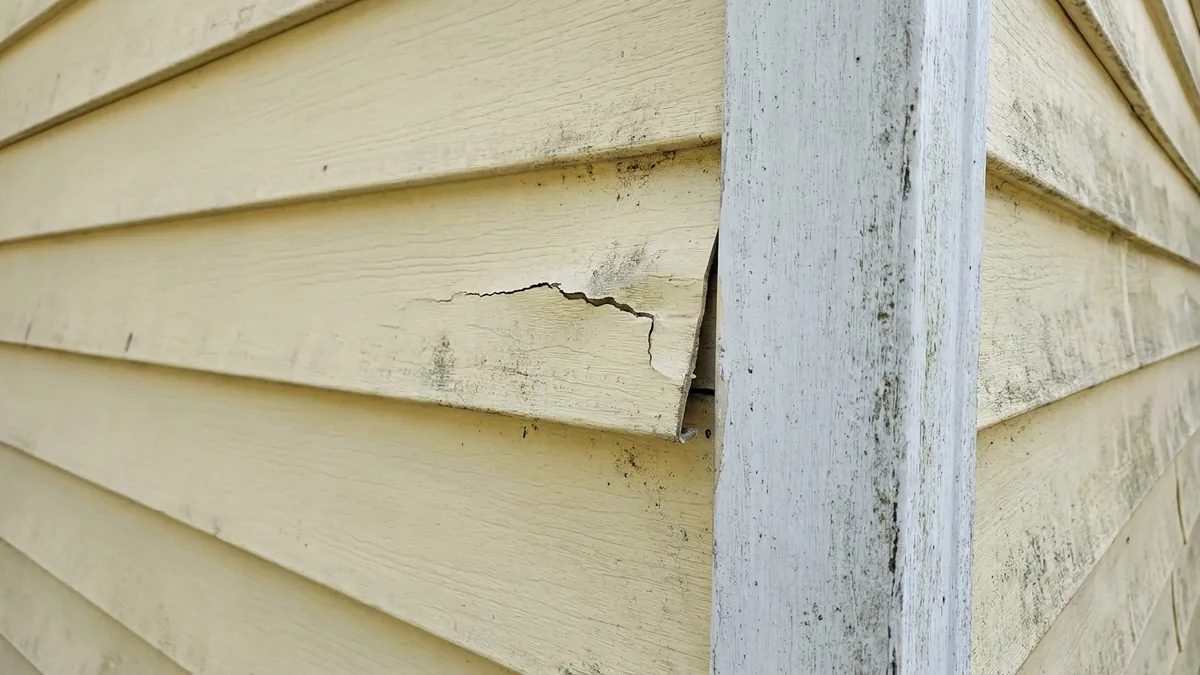
- Cracks, holes or missing pieces.
- Warping, sagging or buckling panels.
- Rot, mold or mildew, or water damage behind the siding.
- Severe or uneven fading. Rinse it first to make sure it isn't just dirt, Fixr says.
If several of these show up across the house, see our siding replacement cost guide.
How to make it last longer
- Wash vinyl once a year with a mild soapy solution and a garden hose. Fixr says never to use a pressure washer.
- Keep the gutters clean so water doesn't run down the walls, Fixr says.
- Trim plants at least a foot back from the house, according to Angi.
- Repair damage quickly, before water gets behind it.
See what siding contractors near you would charge
Describe your project once and compare quotes from local siding contractors. No obligation.
Quotes are handled by our partner Angi. We may earn a commission if you submit a request.
Sources
Figures checked on November 21, 2026.
- Angi, "How Long Does Siding Last?" (no update date shown). angi.com
- Fixr, Joe Roberts, "How Long Does Vinyl Siding Last?" May 20, 2024. fixr.com
- InterNACHI, "Standard Estimated Life Expectancy Chart for Homes." nachi.org
- Bob Vila, Donna Boyle Schwartz, "How Long Does Exterior Siding Last?" updated March 9, 2021. bobvila.com
Common questions
How long does vinyl siding last?
About 20 to 40 years, according to Angi. Fixr says 20 to 30 is typical, and up to 40 with good care in a mild climate.
How long does fiber cement siding last?
About 30 to 50 years, per Angi. Fixr puts it at about 50 years.
What siding lasts the longest?
Brick and stone, at 50 to 100 years or more on Angi's figures.
How do I know my siding needs replacing?
Look for cracks, warping, rot, mold, water damage behind the panels and severe fading.